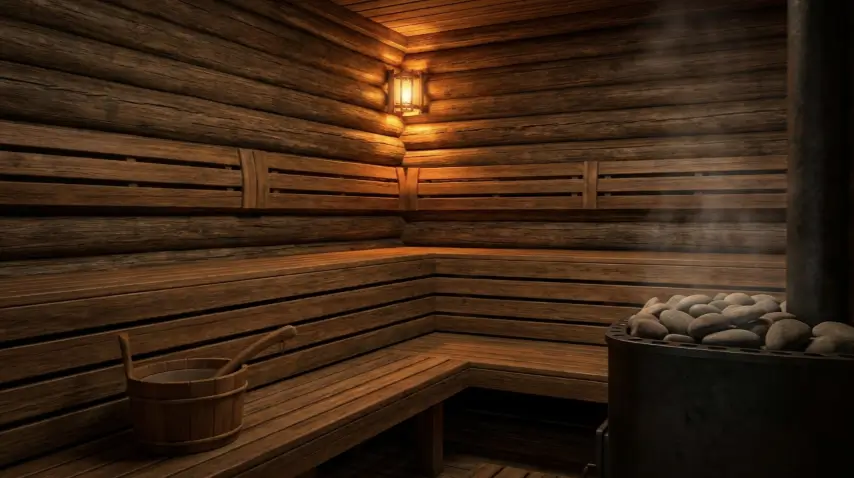
Clean a traditional sauna with plain hot water, a stiff-bristled brush, and a squeegee or towel, never soap, bleach, or household cleaning spray on interior surfaces. Wipe benches down after every session, let the door and vents stay open for airflow afterward, and sand lightly once a year instead of oiling or sealing the wood. Beginners who reach for a bathroom cleaner or a sealant to “protect” the interior are usually the ones who end up replacing warped or blackened boards within a year or two.
Why Bathroom Cleaners Ruin Sauna Wood
Cedar, spruce, and heat-treated hemlock are all porous softwoods left unfinished on the inside specifically so they can absorb and release moisture as the room heats and cools. A cleaning spray, even one labeled gentle or natural, leaves a thin chemical film in that porous surface. The next time the heater runs, that film heats up along with everything else and gives off a sharp, plasticky smell that a wood-only cabin never produces. Repeated exposure also dries out the natural oils in the wood faster than plain water does, which is why sauna builders and most manufacturer care guides say to skip cleaning products entirely on any surface a person’s skin will touch.
What to Do After Every Session
The habit that prevents almost every other problem is a thirty-second wipe-down before you leave the cabin. Run a squeegee or a folded towel across the benches and backrests to clear sweat and any water splashed during a session, then brush loose debris, hair, or grit off the floor boards with a stiff natural-bristle brush. Leave the door open, along with the intake and exhaust vents, for at least an hour so residual humidity has somewhere to go instead of sitting against the wood overnight. Skipping this step even a few times lets sweat salts build up as a dull gray film that is much harder to remove later than it would have been the same day.
How to Handle Stains and Dark Spots Without Chemicals
Dark or shiny patches on a bench usually mean oil from skin contact has soaked in over repeated sessions. Scrub the spot with a brush dipped in hot water only, working with the grain, and give it a few passes rather than one aggressive scrub that can raise the grain unevenly. Stubborn spots respond to a paste of baking soda and water left on for a few minutes before brushing, which lifts residue without leaving a scent or a coating behind the way a store-bought cleaner would. Persistent black or green spotting that does not lift with scrubbing is usually mold rather than a surface stain, and it means airflow after sessions needs to improve, not that a stronger cleaner is needed.
Should the Interior Ever Be Sanded?
Light sanding, not sealing, is the correct long-term maintenance step for a well-used cabin. Once or twice a year, hand-sand the seat and backrest boards with fine-grit paper, working with the grain, to remove the slightly rough, darkened top layer that builds up from skin contact and sweat. Vacuum the dust thoroughly rather than sweeping, since fine sawdust left in corners and vent openings can scorch and smell when the heater runs. Never follow sanding with oil, wax, or varnish on any interior surface. Exterior cladding is a different story and can be treated with an exterior wood oil on a normal deck-maintenance schedule, since it never sees the heat or steam the interior does.
Where the Wood Comes From Matters Before You Ever Clean It
A lot of cleaning headaches trace back to the build, not the owner’s habits. A cabin made from properly kiln-dried cedar or thermally modified wood resists staining and mold far better than a cheaply finished import that was not dried correctly before assembly, no matter how carefully it gets wiped down afterward. Buyers shopping for their first traditional cabin are better off checking wood species and drying process before purchase rather than hoping cleaning will fix a build problem later. Retailers that specialize in the category, including SweatDecks, typically list the wood grade and finish specifics on the product page itself, which is worth comparing against any listing that just says “premium wood” with no further detail.
See also: What blogging habits can teach casino platforms about clearer access
A Simple Weekly and Seasonal Routine
Beginners tend to either over-clean or under-clean, and both cause problems. A workable routine breaks into three tiers. After every session: squeegee the benches, brush the floor, and prop the door open. Once a week for a cabin in regular use: check the corners and under the lower bench for any lingering damp smell, and wipe the glass or window trim with plain water since fingerprints and condensation collect there faster than anywhere else. Once or twice a year: do the fine-grit sanding pass on seats and backrests, vacuum every vent opening and the gap beneath the door, and check the heater’s stone bed for dust or mineral buildup that can slow airflow through the rocks. Floors take the most abuse of any surface, since grit and sand tracked in on bare feet acts like sandpaper under body weight, so a floor mat at the threshold that gets shaken out separately from the cabin itself keeps a surprising amount of debris from ever reaching the wood.
Outdoor cabins add one more habit indoor units skip entirely: checking the roof and door seal for water intrusion after heavy rain or snow. A door that no longer closes flush, or a roof panel with a gap at the seam, lets moisture reach framing lumber that was never meant to handle it, and that kind of damage is far more expensive to fix than a dark bench ever is. Catching a seal problem early, usually a five-minute visual check after a storm, is the difference between a weekend fix and a rebuilt wall section a year later.
Why a Clean Cabin Also Means More Use
Maintenance is not just cosmetic. Large Finnish cohort studies have found that people who use a sauna four to seven times a week show lower rates of fatal cardiovascular events and all-cause mortality than infrequent users, an association that held up after adjusting for other health factors. A 2018 review in Annals of Medicine reported similar joint associations between sauna use and cardiorespiratory fitness on long-term mortality risk. None of that benefit shows up if the cabin sits unused because it smells musty or the benches feel grimy, which is the practical reason cleaning habits matter as much as the initial build quality.
Frequently Asked Questions
Can I use soap or disinfectant spray inside a sauna? No. Soap, bleach, and most household disinfectants leave a residue that off-gasses once the cabin heats past 150 degrees. Plain water and a stiff brush handle nearly everything a home sauna needs.
How often should the benches be sanded? Once a year for a cabin used several times a week is typical, focused on the seat and backrest boards. Sand by hand with fine grit, never follow with stain or sealer, and vacuum the dust out completely.
Why does my sauna smell musty even though it looks clean? A musty smell usually means trapped moisture somewhere airflow doesn’t reach well, often under the lower bench. Leaving the door and vents open for a full hour after each session solves most odor problems within a couple weeks.
Is it okay to oil or varnish the inside of a traditional sauna? Interior surfaces should stay bare wood. Oils and varnishes trap moisture and release odor as the wood heats. Exterior cladding can be treated normally.
References
- Association between sauna bathing and fatal cardiovascular and all-cause mortality events, JAMA Internal Medicine, 2015
- Joint associations of sauna bathing and cardiorespiratory fitness on cardiovascular and all-cause mortality risk, Annals of Medicine, 2018
- Short-term effects of Finnish sauna bathing on blood-based markers of cardiovascular function in non-naive sauna users, Heart and Vessels, 2018
By Rachel Finch